Posts Tagged 'Italian'


Pappa al Pomodoro (Tomato-Bread Soup)

CRW_0492


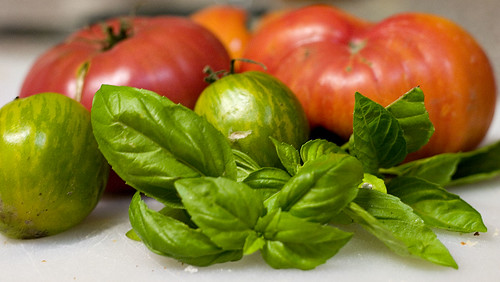
We’ve been buying a lot of tomatoes at the farmer’s market recently because we’ve found a farm stand with good prices on heirloom tomatoes. And the tomatoes are really good.

So I keep looking for new things to do with them. The spaghetti al pomodoro was good. As was the tomato soup. But I’m always looking for something new to try.

Angela originally had this at the Zuni Cafe (I was too interested in my Caesar salad to try it). She had liked it so I thought I would try it again.
CRW_0480


We always have left over bread and we had the tomatoes so there wasn’t much else that was needed. Plus the recipe seemed easy.

And it was. It’s just barely cooked tomatoes with bread to thicken. It took me a bit longer than I expected simply because the prep work was a bit longer than I expected (particularly the blanching of the tomatoes). But it wasn’t a lot of work.

I liked the soup a lot (although I never did get around to eating the leftovers). Angela didn’t like the barely cooked flavoring of the tomatoes. The bread gives it a consistency similar to cream of wheat which I liked. It’d be good if you were having teeth problems. I plan to make it with roasted tomatoes in the future to see if Angela might like it better.

CRW_0485


Pappa al Pomodoro (Tomato-Bread Soup)
Adapted from The Zuni Cafe Cookbook

2 lbs. tomatoes
1/2 cup olive oil
1 cup diced yellow onions
salt
3 garlic cloves, diced
1 bunch fresh basil
sugar (optional)
1/4 lbs. day old Italian-style bread, without crusts
black pepper

  1. Blanch half the tomatoes in boiling water for 30 seconds. Rinse them under cool water and peel and core them. Cut them into 1/2″ chunks. Core the remaining tomatoes and cut them into 1/2″ chunks. Make sure to capture all juices.
  2. Sweat the onions over medium-low heat in a large sauce pan with 1/4 cup olive oil and a pinch of salt until softened, about 5 to 10 minutes. Add the garlic and sweat for 2 to 3 minutes more, or until the garlic is softened.
  3. Add the tomatoes and juices to the sauce pan.
  4. Remove the leaves from the basil stems. Add the basil stems to the sauce. Cook over medium heat until the tomatoes just start to break up.
  5. Taste for seasoning and add salt or sugar if necessary.
  6. Remove the basil steams and add the torn basil leaves. Tear the bread into pieces and add to the soup. Stir to combine.
  7. Bring to a simmer then remove from the heat. Cover and let sit for 15 minutes.
  8. Serve the soup with black pepper and a drizzle of olive oil.

Serves 2 to 4.

Spaghetti all’Amatriciana

CRW_0350

As I’ve said before, simple pasta dishes appeal to me. There’s something infinitely satisfying about taking a few good ingredients and turning them into something spectacularly good. And while Dr. Atkins may not approve of a meal like this, it’s one of my favorites. It’s actually good enough that we served it as a course for Christmas last year (we served a meal in the Italian style).

This dish is becoming increasingly popular on Italian restaurant menus. Particularly, those that want to appear more authentically Italian (as opposed to Italian-American). The sad thing is that they seldom have an authenticity nor are they particularly good. Angela ordered one a few weeks ago that wasn’t spicy at all.

And, really, this is such a simple and fast dish that a restaurant should be able to do a very good rendition of it without too much effort. I would be fine if it wasn’t this most authentic but at least make it taste good. There’s no real excuse.

CRW_0342

The recipe itself takes about 40 to 45 minutes to make. For me, that’s a pretty quick dinner (but not Rachel Ray speed). I usually prepare the ingredients and then start cooking the sauce. Once the tomatoes are added and they begin to simmer, I start boiling the water for the pasta. When the pasta’s done, I add it to the sauce and go from there.

I don’t know exactly how authentic this recipe is. It does use pancetta in place of guanciale (I would try to make some if I could find a local source for pork jowl). It also uses spaghetti in place of bucatini (bucati was available at Trader Joe’s for a month or so but was nearly impossible to actually eat). The taste seems pretty close to what I had in Rome but I don’t know how memory has influenced that. Either way, it’s still pretty tasty.

CRW_0336

Spaghetti all’Amatriciana
Adapted from Roma: Authentic Recipes from In and Around the Eternal City
CRW_0346

1 tbsp olive oil
2 oz. pancetta, diced
1/4 cup diced onion
a pinch of red pepper flakes
1 tbsp tomato paste
1 14.5 oz. can of diced tomatoes
salt
2 tbsp Pecorino Romano, grated
1/2 lbs. spaghetti

  1. Place the olive oil in a skillet over medium-high heat. When the oil is hot, add the pancetta and onion. Cook until the pancetta is browned.
  2. Add the red pepper flakes (add more or less depending on your taste) and the tomato paste. Stir well and allow to cook for one more minute.
  3. Add the tomatoes and their juices to the skillet. Scrap up any browned bits. Simmer the tomato sauce for 30 minutes.
  4. Bring salted water to a boil and add the spaghetti. Cook for one minute less than indicated on the package, about 7 minutes. Drain the spaghetti.
  5. Stir in half the Pecorino Romano into the sauce. Add the spaghetti and mix well. Cook for one minute more or until the pasta is al dente. Add the remaining Pecorino Romano.
  6. Serve with additional Pecorino Romano to sprinkle on top.

Serves 2 to 3.

Gamberi alla Cannavota (The Shrimp of Trattoria Cannavota)

CRW_0171


When I first tasted these shrimp, my response was “best shrimp ever.” To be honest, I’m prone to hyperbole. However, this time I wasn’t exaggerating. These were the most exquisite shrimp I’ve ever tasted. The quality of the shrimp themselves wasn’t particularly high: they were frozen farmed shrimp from Trader Joe’s.

The blessing and the curse of shrimp is that they have a relatively mild flavor. Shrimp just don’t taste particularly much like shrimp. And, frankly, most shrimp applications are lacking. I wish I had the idea of making a shrimp stock to use in the sauce to go with the shrimp. It makes perfect sense: it’s similar to using chicken stock for pan sauce for chicken.

But, because shrimp are so small, the flavoring of the stock goes even further. The shrimp manage to absorb a lot of the flavor from the shrimp stock even though they’re only cooked in it briefly. With apologies to Julia Child, the shrimp tasted more shrimpy.

CRW_0161


The recipe itself is pretty straightforward. You make a shrimp stock with the shrimp shells. Then the shrimp are pan-fried in olive oil and a reduction is made with some garlic and the shrimp stock. The only modification I made to the recipe were to use dry vermouth instead of white wine and to brine the shrimp.

If you think that brining poultry makes a difference, wait until you try it on shrimp. It improves the texture immensely and it also means that there’s a larger window for cooking the shrimp in. It also doesn’t take very long which is nice.

If you like shrimp, I implore you to try this recipe. It really is that good.

CRW_0166


Gamberi alla Cannavota (The Shrimp of Trattoria Cannavota)
Adapted from Trattoria Cooking

For the Shrimp Stock:
1 lbs. shrimp shells
1 small carrot, cut into three pieces
1/2 onion, peeled and cut in half
1 stalk celery, cut into three pieces
2/3 cup dry vermouth
4 cup water

For the Shrimp:
1 cup water
1/4 cup kosher salt
1/4 cup sugar
6 ice cubes

1 lbs. shrimp, peeled and deveined
1/4 cup olive oil
2 cloves garlic, diced
1/4 cup dry vermouth
1 tbsp softened butter
2 tbsp parsley, diced

  1. Combine all the ingredients for the shrimp stock in a sauce pan. Cook at a high simmer over medium-low to medium heat for 1 to 1 1/2 hours or until the shrimp stock is reduced to 1 cup. Drain the stock through a strainer and reserve the stock. This can be prepared in advance and the shrimp stock refrigerated until used.
  2. Put 1 cup of water, the kosher salt, and the sugar in a sauce pan over high heat. Stir the contents until the salt and sugar are desolved in the water. Remove from the heat and pour into a heatproof bowl. Add the ice cubes. When the brine is cool, add the shrimp for 15 minutes. Remove the shrimp from the brine and pat dry.
  3. In a large sautée pan, heat the olive oil over medium-high heat until just before smoking. Add the shrimp and cooked until they are lightly golden on both sides, about 1 to 2 minutes per side. Remove the shrimp to a plate.
  4. Add the garlic to the pan and cook until the garlic is golden, about 1 minute. Add the vermouth and the shrimp stock. Increase the heat to high and reduce the stock until it is a medium consistency. Taste for seasoning.
  5. Reduce the heat to medium and add the shrimp, butter, and parsley. Mix the contents well and cook for 1 minute more.
  6. Serve the shrimp in bowls with good bread.

Serves 2 to 3.

Costine al Vino Rosso (Pork Spareribs with Red Wine)

CRW_0155

There’s a regular fight in our house about what to have for dinner. Angela wants me to make something I’ve made before. I find that boring and want to make something new. Sometimes she wins, sometimes I win.

Last night, Angela wanted me to make Slow cooker “BBQ” Spareribs again. I wanted to make something new. This time I won.

Because we don’t have a grill (one of the downsides of apartment living), I decided to indulge my love of braises. And, really, how can pork braised in red wine and tomato sauce be bad?

CRW_0157

And it wasn’t to me. Sadly, Angela didn’t particularly care for it. I’m not entirely sure why. I know she just disliked the taste of the Jerusalem artichokes that I served with it. So, this recipe is not Angela approved (I’m thinking about making a graphic of Angela Approved Seal for recipes she likes; sort of an indicator as to whether or not a picky eater would like it).

As written, the recipe results in ribs that aren’t fall-off-the-bone tender. If I were to make them again, I’d braise them for longer. There’s also no salt involved in the recipe as written. I think Mario Batali was phoning it in on this recipe. I’ve updated the recipe to make it better.

Otherwise, I liked it. There’s room for improvement but it was still tasty.

CRW_0141

Costine al Vino Rosso (Pork Spareribs with Red Wine)
Adapted from Molto Italiano

1 1/2 lbs. pork spare ribs, cut into 2 inch pieces
3 tbsp olive oil
1 medium red onion, coarsely diced
1 carrot, peeled and cut into 2″ pieces
1 celery stalk, cut into 1″ pieces
1 cup red wine
1 cup chicken stock
1 cup basic tomato sauce
1 anchovy fillet, rinsed and patted dry
4 sprigs of rosemary
Salt

  1. Place the spareribs in a large pot and cover with cold water. Bring to a boil over high heat and then reduce to a simmer. Simmer for 30 minutes. Drain the spareribs and then rinse them. Season the spareribs with salt
  2. Add the olive oil to a dutch oven and heat over medium-high heat until the oil is just about smoking. Add the onion, carrot, and celery and cook until lightly browned, about 10 minutes.
  3. Deglaze the dutch oven with the red wine, scrapping up any browned bits. Add the chicken stock, the tomato sauce, and the anchovy fillet. Season the sauce with salt. Add the pork and stir together.
  4. Bring the sauce to a boil, cover, and reduce heat to a simmer. Cook for 2 to 2 1/2 hours or until the pork is fork tender. Serve in small bowls.

Serves 2 to 3.

CRW_0143


Basic Tomato Sauce
Adapted from Molto Italiano

2 tbsp olive oil
1/2 onion, finely diced
2 cloves of garlic, diced
1/4 carrot, finely diced
1 1/2 tbsp fresh thyme, diced
1 28-oz. can of whole tomatoes

  1. Heat the olive oil in a sauce pan over medium heat. Add the onion and garlic and cook until lightly browned, about 8 minutes.
  2. Add the carrot and thyme and cook until the carrot is soft, about 5 minutes.
  3. Add the tomatoes and the tomato juice to the skillet. Break up the tomatoes with a spoon. Simmer the tomato sauce for 30 minutes. Season the sauce with salt.

Makes 2 cups (yes, that’s twice what you need for above, use the rest for pasta or something).

Spaghetti alla Carbonara with Homemade Pancetta

CRW_0138

I was correct: Spaghetti alla Carbonara is much better with homemade pancetta.

Homemade Pancetta

CRW_0103

One of my best memories of pancetta is it in a very American context. I had been through a 4 week study abroad in Italy and was then traveling around Europe. My mom had joined me for a week and we were in Riomaggiore in Le Cinque Terre. Staying in a small apartment, we decided to make breakfast for ourselves to save money. The best breakfast I can remember was simply fried eggs with pancetta cooked in a manner similar to bacon. And it’s not that the product was particularly good (it was), but it was simply such a comforting change from the Italian food I’d been eating for months.

I actually tried to recreate that breakfast back at home but the pancetta I got was too salty and was practically inedible. The main problem with pancetta here is just how expensive it is. It’s really hard to justify paying the equivalent of $16 a pound for pork belly (or more!). Trader Joe’s sells it for a fairly reasonable price but, anymore, they only sell the pre-diced version which isn’t bad, it just doesn’t do well for things that requiring stuffing (such as braciale).

CRW_9726

Ever since I bought the cookbook Charcuterie, I had wanted to make pancetta. It’s probably the inner engineer in me, but there’s something particularly exciting about the chemical changes necessary to cure meat. That, and it tastes good (after all, it’s pretty much bacon).

I was particularly proud of making the pancetta. It’s not that it took a lot of work (it just took awhile to cure and then dry). Similar to the bratwurst, it was the act of making something that was far different than I’d ever made before (I act like I was personally changing the chemical bonds to cure the meat).

The recipe is pretty easy as long as you have the proper materials. Measuring by weight is important as otherwise you run the risk of changing the ratio of kosher salt to pink salt. Pink salt is not the pink Himalayan salt but is instead salt with 6.25% sodium nitrate. It’s colored pink so that you don’t mistake it for regular salt (sodium nitrate is toxic in large quantities but the sodium nitrate will chance composition as the meat cures so there’s no risk).

CRW_0096

The drying step is optional but makes for a more authentic product. I used a small refrigerator that I had left over from college for the curing and drying portions as it had plenty of room and my normal refrigerator is pretty full (I also use it to cool down chicken stock and to brine a Thanksgiving turkey).

As for the flavor? It was good. Really good. It was almost so flavorful that it was too flavorful to eat. I can’t wait to try it in Pasta with Corn, Pancetta, and Sage or Spaghetti alla Carbonara (of course if I could find some pork jowl I’d try and make guanciale).

CRW_9730

Homemade Pancetta
Adapted from Charcuterie

One 4-pound (1.8 kg) pork belly, skin removed
3 garlic cloves, minced
8 grams (1.5 tsp) pink salt
35 grams kosher salt
18 grams (1.5 tbsp) dark brown sugar
28 grams (3 tbsp) ground black pepper
7 grams (1.5 tbsp) juniper berries, crushed
3 bay leaves, crumbled
3 grams (.75 tsp) grated nutmeg
3 or 4 sprigs of thyme

  1. Trim the pork belly to be rectangular and remove the skin if present.
  2. Combine all the ingredients except the pork belly and half of the black pepper in a bowl. Rub the mixture onto all sides of the pork belly.
  3. Place the pork belly in a large 2-gallon zip top bag and refrigerate for one week, turning over every other day. When the pork belly is done curing, it will be firm in the middle. If it’s not firm, refrigerate for one to two more days.
  4. Remove the pork belly from the zip top bag and rinse under running water thoroughly. Dry completely with paper towels. Spread the remaining black pepper over the meat side of the pork belly. Roll the pork belly tightly (there should be no air pockets) and secure with butcher’s twine. Make sure to loop both around the circumference of the roll and around the length of the roll.
  5. Place the pork belly in a spare refrigerator set to its lowest setting on a middle shelf. Place a tray of water combined with 2 tbsp kosher salt in the bottom. This will allow the pancetta to dry. Leave in the refrigerator for 2 weeks.
  6. After drying, the pancetta will keep in a refrigerator for 3 weeks and a freezer for 4 months.

Yields 3 lbs. pancetta

Ravioli al Formaggio con Sugo di Pomodoro (Cheese Ravioli with Tomato Sauce)

CRW_9963

The title today is stretching my Italian. I think that’s the correct translation (from English to Italian) but I’m not an expert by any means. In Italy, I would say something in Italian and get a response in English. But at least I tried.

Luckily for us, tomatoes are still in season here so we’ve been having a lot of tomato sauces and tomato soups (don’t you wish you lived in Southern California? of course you probably don’t have massive fires where you live so it’s probably a wash). We hadn’t had ravioli in a while and I figured it would be a good match for the tomatoes I bought at the Farmer’s Market.

CRW_9953

When it comes to ravioli, I usually just make cheese ravioli. Meat ravioli can be good but frequently they tend to be too much flavor in one place. I also don’t particularly care for the texture of chopped meat. Cheese ravioli have a much simpler, cleaner flavor. I tried to keep the ravioli filling simple, partially because I’m lazy, but mostly because it works. The recipe could easily be modified by using a different herb or different cheese.

The problem with saucing cheese ravioli is that the sauce can’t be too complicated or flavorful or it will overpower the taste of the ravioli. So I figured that the simpler a sauce the better and figured tomatoes with a few aromatics and some herbs would be good. Plus we had fresh thyme in the fridge.

CRW_9956

While homemade pasta seems like a luxury and very time consuming, it really isn’t in this recipe. It took about 45 minutes or so from walking into the kitchen to finishing dinner. The pasta gets made while the sauce cooks so there’s no real downtime.

I previously wrote more in depth instructions for pasta making and didn’t feel the need to repeat them here. When making my pasta, the dough ended up a bit dry so I added a few drops of water and that took care of the problem.

The ravioli were good but Angela wasn’t as big a fan of the tomato sauce as I was. So I get to eat the leftovers for lunch today.

CRW_9959

Ravioli al Formaggio con Sugo di Pomodoro (Cheese Ravioli with Tomato Sauce)

Tomato Sauce:
1 1/2 lbs. whole tomatoes
2 tbsp butter
1/2 medium onion, diced
1 tbsp diced garlic
4 sprigs thyme
salt

Cheese Ravioli:
1/2 cup ricotta
1/4 cup grated parmesan
2 tbsp diced Italian parlsey
3 eggs
2 cups all purpose flour
an egg wash of 1 egg beaten with 1 tbsp of water

  1. Cut the tomatoes in half horizontally. Place them in a large skillet, cover, and cook over medium heat for 10 minutes. Remove the tomatoes from the skillet and run them through a food mill with the disk with the largest holes (or peel the tomatoes and dice them).
  2. Clean the skillet and melt the butter over medium-high heat. When the butter is hot, add the onions and a pinch of salt. Cook until the onions are lightly browned. Add the garlic and cook one minute more. Add the tomatoes and season with salt. Lightly simmer for 25 to 30 minutes.
  3. In a bowl, mix together the ricotta, parmesan, parsley, and one egg. Season with salt and pepper and mix well.
  4. Using the well method, mix the flour and two eggs together. Knead the dough until it comes together. Divide the pasta dough into four pieces.
  5. Roll out one piece of pasta dough to the thinest setting. Place 1 tsp of ricotta mixture about 1 inch from the corner of the dough. Repeat with the remaining mixture until no room is left on the dough. Each drop should be approximately 1 inch from any other. See the picture above for an illustration. Spread the egg wash in lines between the filling mixture. Roll out another piece of dough to the thinest setting and place over top of the first piece of dough. Press down between the filling and try to remove any air bubbles. Cut the ravioli with a pastry cutter or pizza cutter. Make sure all edges are sealed on the ravioli. Repeat with the remaining pasta dough and ricotta mixture.
  6. Cook the ravioli in salted boiling water for approximately 2 minutes after they begin to float.
  7. Add the thyme leaves to the sauce. Remove the ravioli from the water and add them to the sauce. Stir and cook for 1 minute more.
  8. Serve the ravioli with the sauce and sprinkled with grated parmesan.

Serves 3 to 4.

Spaghetti alla Amatriciana Bianco

CRW_9785

Simple pasta dinners are a staple in our household (it should really be apartment-hold but I don’t think that’s a real word). The main reason is that we frequently can’t figure out what to actually eat for dinner and we usually get to the point where either I need to make something very fast or we go out to dinner (and, given both of us have an innate frugality, eating out is seldom an option).

This is the point where I usually reach for a simple pasta recipe. This was the situation last night. To complicate matters further, we had spaghetti al pomodoro earlier in the week so a tomato sauce is out.

We eat traditional Bucatini alla Amatriciana relatively regularly (as regularly as anything we eat) so the same dish just without the tomatoes sounded like it could be a winner. And it was quite good. It’s very similar to Spaghetti Alio e Olio, just with panchetta added (and how could that be a bad thing?). The dish is extremely fast: the critical path is the cooking of the pasta. The sauce cooks in about 4 to 5 minutes. The only key is to not put in any more butter or olive oil than specified; if you do, it will end up too oily.

CRW_9775

In other news, we didn’t clean up from the pork chops the other night and we think our cats absconded with the leftovers. Oops. I’m just hoping they didn’t hide it somewhere and we’ll find it in several weeks. Our cats eating pork always makes me imagine the two of them stalking and attacking a pig.

CRW_9778

Spaghetti alla Amatriciana Bianco
Adapted from Trattoria Cooking

1/2 lbs. spaghetti or bucattini
1 tbsp butter
2 tbsp olive oil
2 oz. panchetta, diced
a pinch of red pepper flakes
1/4 cup Italian parsley, diced
1/3 cup grated parmesan cheese plus more for serving

  1. In boiling salted water, cook the pasta for 1 minute less than indicated on the packaging. Drain the pasta, reserving 1/4 cup of the pasta cooking water.
  2. In a large skillet, melt the butter with the olive oil over medium heat. When the butter stops foaming, add the panchetta and red pepper flakes and cook until browned, about 2 to 3 minutes.
  3. Add the cooked past, the reserved cooking water, the parsley, and parmesan cheese. Stir and scrap up any browned bits stuck to the bottom of the pan. Cook for 1 minute more. Serve with extra grated parmesan cheese on top.

Serves 2.

Pork Chops with Peppers and Capers

CRW_9763

About once a year, Costco has a coupon that makes a family pack of pork chops extremely affordable. With a reluctant Angela in tow, I buy a package. These pork chops are pretty big: I usually cut them in half as we really don’t need that much protein. So I use one or maybe two of them and then freeze the rest. We then proceed to eat a pork chop ever month or so for the rest of the year. I think I need to stop buying large quantities of pork chops.

I decided that we really need to finish up the pork chops we had (the date on the package said January but I tried to ignore that; I think there’s one more thats left). We could use the room in the freezer and they are coming up to their anniversary in there. Angela wasn’t particularly enthused about the idea (she’s not a big fan of pork chops because they have a tendency to be a bit tough) which is why we don’t eat them very often (see the about page).

The real question when pulling something out of the freezer (particularly when it’s something that I don’t cook particularly often) is how to prepare it. I’ve made enough bad pork chops in my life (they have to be one of the easiest things to overcook) to know that this is a delicate question.

CRW_9768

I settled on a recipe from Mario Batali because, well, I had just gotten his cookbook (we had a 50% off coupon from Barnes & Noble) and it looked reasonably good. It also happened to fit into things we just happened to have (well, with some modifications): pork chops, peppers, leftover white wine, and pearl onions. Now, the original recipe called for bell peppers but I only had an Italian frying pepper. It also called for “bulb onions” which I’m guessing are just fresh pearl onions with their stems attached. It also called for olives which I don’t like (I’ve tried several but haven’t come up with any I don’t spit out; I really want to like them; what’s a good “starter” olive?) so I left them out.

The original recipe called for a lot more red pepper flakes than I’ve listed here. The dish was hot. Very hot. Almost too hot to eat. It also repeated the pepper spray incident but to a lesser extent (Angela’s words: “Did you create pepper spray again?”).

This is one of the better recipes for pork chops I’ve had. Surprisingly, they weren’t over-brined (which I was afraid of given the length of time they are brined for). The peppers and onions also worked well with the pork chops. The sauce reminded me a bit of an Asian style stir-fry sauce. It might have been the red pepper. Sadly the potatoes were overpowered in taste by the pork chops. I also think the potatoes weren’t that good (but they were pretty).

CRW_9770

Pork Chops with Peppers and Capers (Cotolette alla Zingara)
Adapted from Molto Italiano

5 cups water
1/4 cup kosher salt
1/4 cup brown sugar
3 black peppercorns
1 bay leaf
2 pork chops
salt and black pepper
1/4 cup all purpose flour
2 tbsp olive oil
1 Italian frying pepper, cored, seeded, and cut into thin slices
4 pearl onions, peeled and sliced into rings
1/4 tsp red pepper flakes
1 tsp capers with brine
1/2 cup dry white wine

  1. Combine 1 cup of water, the kosher salt, the brown sugar, the peppercorns, and the bay leaf in a sauce pan. Bring to a boil, stirring to desolve the brine ingredients. Pour the brine into a bowl and add the remaining 4 cups of water. Place the pork chops in the brine, cover and refrigerate overnight.
  2. Dry the pork chops with a paper towel. Season on both sides with salt and pepper. Dredge in the flour.
  3. Over high heat, heat the olive oil in a large skillet. Brown the pork chops in the oil, about 7 minutes on the first side and 4 minutes on the other. Remove the pork chops to a plate.
  4. Add the onions, peppers, red pepper flakes, and capers to the skillet. Cook for one minute, stirring constantly. Deglaze with the wine, scrapping up all the brown bits.
  5. Add the pork chops back to the skillet and simmer for 10 minutes or until the pork reaches 135°F (mine cooked past this point but we’re still good).
  6. Season the sauce with salt and pepper. Serve covered with the sauce.

Serves 2.

Spaghetti al Pomodoro (Spaghetti with Tomatoes)

CRW_9746

Sometimes the simplest things are the best. And I think that spaghetti with a simple tomato sauce is one of them. Just the taste of pure, ripe tomatoes. Not overcooked and not overly complicated.

Recently, there was a book published (which I haven’t read) regarding the choice of last meals for chefs (apparently that discussion is popular among chefs). Apparently, the most common selections are simple, classic foods (with Mario Batali a notable exception). I would like to think that spaghetti al pomodoro would be a similar meal. Would it be my choice for a least meal? I don’t know. I don’t particularly relish the idea of devising a last meal.

In any case, I do like simple tomato sauces on pasta. There’s something both comforting and tasty about it. I’ve tried a number of different techniques and, while I still like a complicated ragú based on my grandmother’s, I think I’ve found a good option for a simple and fresh version.

This recipe really depends on the freshness of the tomatoes. I really don’t think it would nearly as well with canned tomatoes (even San Marzano). When we went to the Santa Monica Farmer’s market, I found several smallish tomatoes that were advertised as being especially for sauce. Given that I only ever really use tomatoes for sauces, I figured they’d be a good choice.

CRW_9743

This is fundamentally a simple recipe. The hardest part is making the pasta but that could be easily replaced by factory pasta.

My technique for pasta making comes mainly from experimentation. I have found that a ratio of 1 cup of King Arthur all purpose flour to 1 extra-large egg (the size of the egg is important). This is not the ratio recommended in any cookbook I’ve ever found (most recommend using large eggs but extra-large eggs are cheapest atTrader Joe’s). I don’t know how important the brand of flour is. I always make my pasta by the well method as it doesn’t seem worth dirtying my mixer bowl.

I wouldn’t recommend rolling the pasta by hand. I tried once (before I had a pasta maker) and it was a disaster. Without a pasta maker, use factory made pasta.

CRW_9737

Spaghetti al Pomodoro (Spaghetti with Tomatoes)
Adapted from Essentials of Classic Italian Cooking

1 lbs. tomatoes
1/4 large onion, skin removed
2 1/2 tbsp butter
Fresh pasta made with 2 cups of flour and 2 eggs
2 basil leaves
1/4 cup grated parmesan cheese

  1. Slice the tomatoes in half vertically and place them in a skillet. Cover the skillet, turn the heat to medium and cook for 10 minutes.
  2. Remove the tomatoes from the skillet and run them through a food mill (alternately, skin the tomatoes and then dice them).
  3. Return the tomatoes to the skillet and add the onion and butter. Slowly simmer over medium heat for 30 to 45 minutes, stirring occasionally.
  4. Slightly undercook the pasta in salted boiling water (taste the pasta for doneness). Discard the onion and add the pasta to the skillet and cook for 1 minute more.
  5. Serve the pasta with slivers of basil leaf and parmesan cheese on top.

Serves 2 or 3.

CRW_9742

Fresh Pasta

1 egg per cup of flour

  1. Place the flour on a board and make a well in the center. Break the eggs into the well.
  2. Using a fork, mix the eggs together. Slowly, add flour from the edges of the well. Eventually, the mixture will be too mixed to use a fork. Switch to your hands and mix the eggs and flour together.
  3. Once the mixture becomes somewhat homogeneous, start kneading the dough. Knead for several minutes after it has come together.
  4. Divide the dough into fourths. Feed each through the pasta maker individually. Start on the largest setting, feed the dough through, then fold in half, and feed through again. Repeat until the dough has become uniform.
  5. Feed the dough through the pasta maker at smaller settings until reaching the desired thickness (on the Kitchenaid Pasta Maker this is 6 for spaghetti for me). It should go through at least four settings on the pasta maker in total. Sprinkle flour on each piece of dough so it doesn’t stick.  And remember, when determining thickness, the pasta will approximately double in width when it’s cooked.
  6. Cut the dough into the desired shape (I use the larger pasta cutter for the spaghetti al pomodoro).
  7. Coil the pasta together and sprinkle with flour so it doesn’t stick.
  8. Cook the pasta in salted boiling water. It will be done about 2 to 3 minutes after it floats to the top.

Serves 1 per egg/cup of flour.